WE ARE CURRENTLY OPENWE ARE CURRENTLY CLOSED
OPENCLOSED

 OPENING TIMES
 LOCATIONOPENING TIMESLOCATION
The Museum of Pilgrimages and Santiago presents IN ITINERE, a photographic project by Javier Iglesias Ramos.
What has motivated the pilgrim and what will he gather along the way? To what extent has the Camino de Santiago changed him?
The experiences testified in this exhibition are, in reality, about the rediscovery of a home for the soul and heart, an ubi consistam that does not coincide with a place but with inner peace, as Novalis knew well.
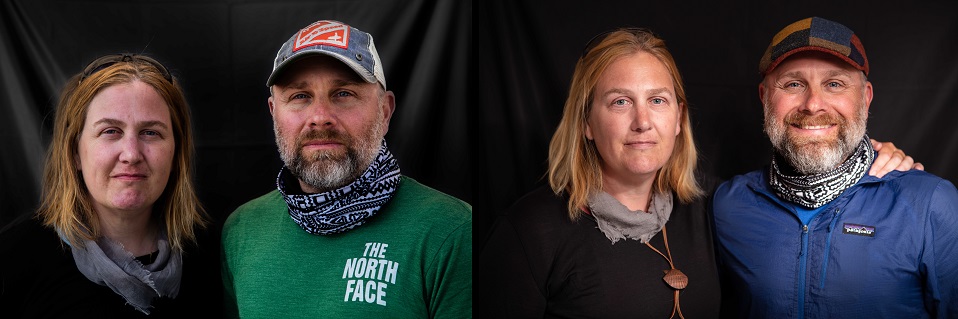
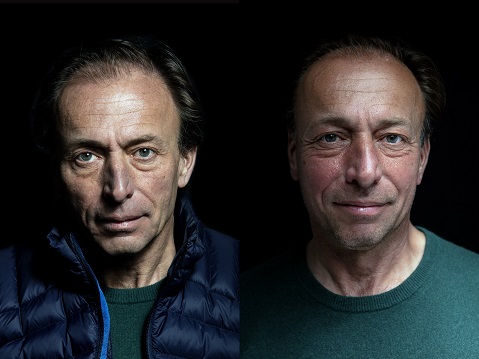
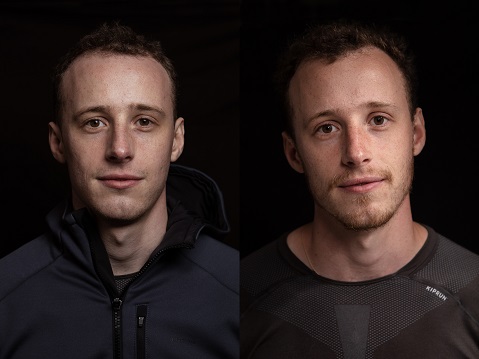
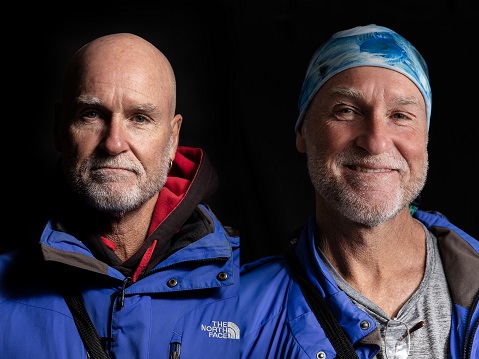
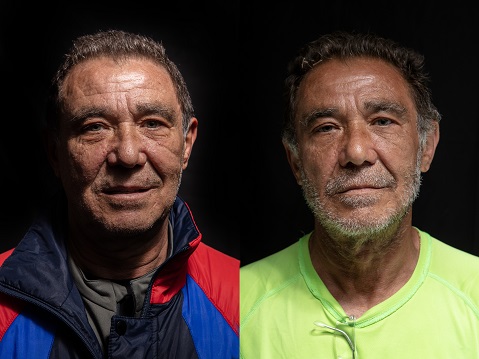
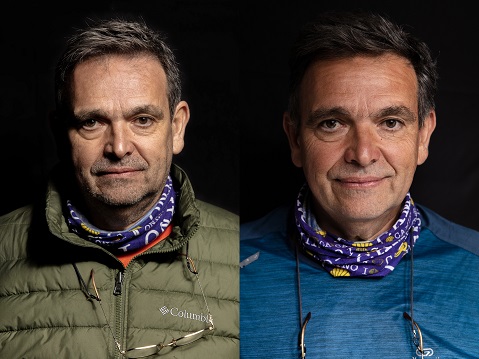
The work of photographer Javier Iglesias Ramos aims to "measure" this journey and discovery through the camera. The guiding idea behind this project was to find the trace of his life experience in the faces of the pilgrims. Hence the project to photograph them at the start of the Camino, in Roncesvalles, and then at the end, in Santiago, to capture not so much their physical changes, but any change in their expression, almost one could say in their soul: and the soul certainly shines through in the photographs.
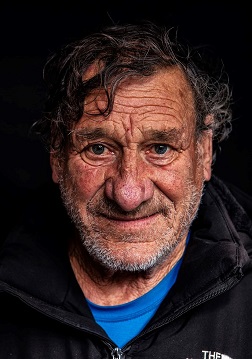
To obtain such a fine record of the mood of the people portrayed, Javier Iglesias Ramos chose to eliminate the context from the portrait itself. All his portraits have the same black background and similar lighting, so that all the photographed faces appear under equal conditions, almost like test samples. In contrast to the famous triad of things necessary for literary translation, la testa, il tisto e il contesto, - the head, the text, and the context - in the photographic translation of this life experience that is the Camino, Javier opted for a strict comparison between two: his head and the text formed by the pilgrim's face, refusing to be aided by any context.
Visitors will judge the result.
Wo gehen wir hin?
Immer nach Hause.
Where are we going?
Always home.
Novalis (1772-1801)
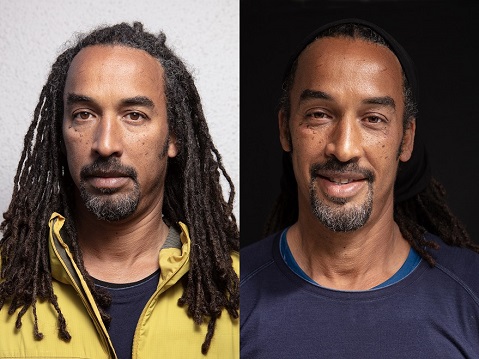 |
Marc Gaspard France (Guadeloupe) 25 years ago, in 1998, I had no goals or perspectives in my life. However, as it often happens in my life, someone came into my life and helped me purify my body and mind. One day, that person asked me what I truly wanted to do in life. I responded that I wanted to save people, but I needed someone to guide me. It was at that moment when they said to me, "You should do the Camino de Santiago..." In 2022, when I turned 50, I felt like I was reliving the exact same situation as 25 years ago, but my friend was no longer there to comfort me. And I was still not saving anyone. There was no way to go back. So, I embarked on the Camino de Santiago. |
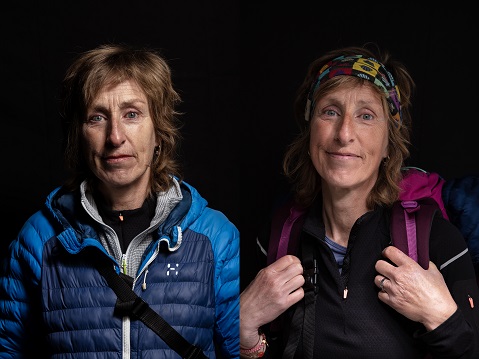 |
Magda de Jongh The Netherlands What I see the most in the first photo is: sadness, tiredness, worry. What I see the most in the second photo is: energy, joy, and satisfaction! |
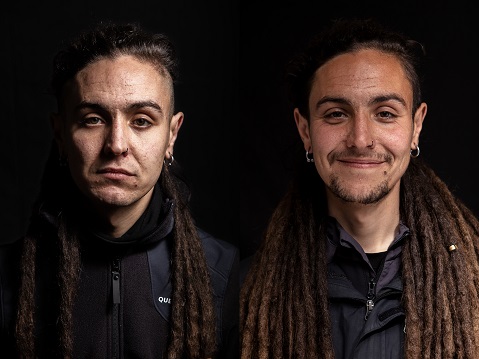 |
Juan Otegi Spain (San Sebastian) |
 |
Tommy Ruud Norway My Camino was a strong experience. Physical, mentally and spiritually. The first day, over the Pyrenees in the beginning of March, was rough, even for a Norwegian. After that, I felt like every day got better and better. Strange and amazing things happened. I met some interesting people, and passed beautiful and interesting places and villages. When it came to an end, I couldn’t believe it. I just wanted to continue. I got very emotional, and cried when I entered Santiago de Compostela. |
Friendship
The Camino de Santiago is also a journey of new friendships that are formed along the way. After all, friendship itself is always a walk, a walking together, as anyone with lifelong friends knows well. And if you lose a friend, it often happens due to the different paths that each one has taken in the journey of life. To Adriana
 |
|
Sharyn Wooten and Guy Atkins United States of America (Seattle) |
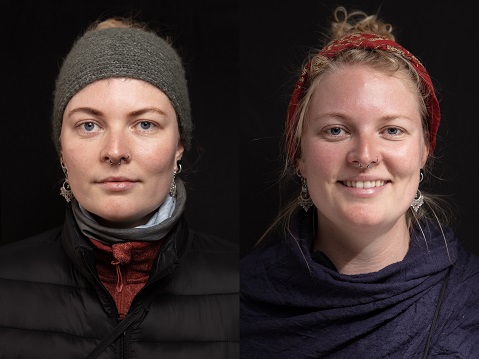 |
Anna-Marÿe de Boer The Netherlands I was waiting in my life for a few different things: a house, a job, and some kind of purpose. I stood still and needed to move, but I did not know how. I decided to move, literally. To start walking. After a while, I knew the different sorts of pain. The pain when you can push through and the pain when you need to stop. My first stop was in Pamplona. I needed to take a day off to give my knees a rest, which was hard because I had to leave the group that I met in Roncesvalles. I did catch up with them a week later; it felt like I hadn't seen them for months. The Meseta caught me. I'm used to the flat landscape, but after a few days of no change in the landscape, my body stopped walking. It was mental; my motivation was gone, and I didn't know why I was doing this. I decided to stop walking for a day. When I started again and the landscape started to change, a new energy hit, and I could walk again. During my Camino, I found a home (literally, I could move in right away) and a job. I just had to be reminded to start moving again. This experience has brought me so much, especially the people I met along the way. I remind myself a lot that we are all just a giddy goose. |
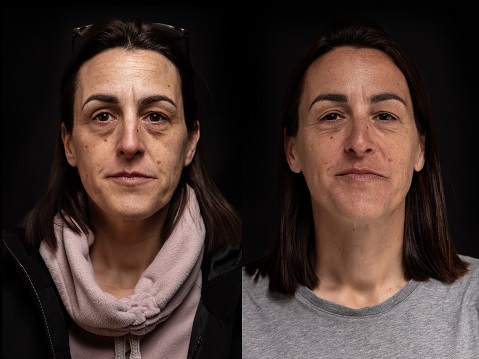 |
Lola Pérez Catala Spain (Valencia) |
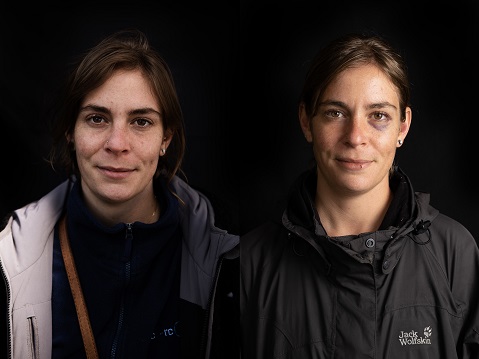 |
Marine Lesourd France |
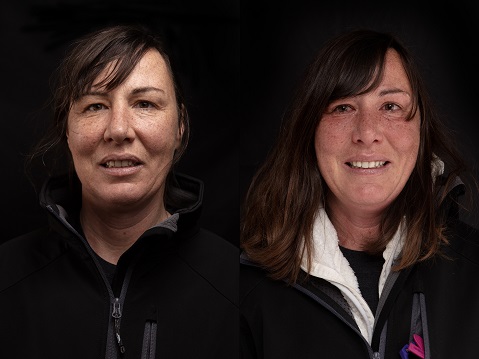 |
Cecile Hastrais Switzerland When I started the French Camino, I did not think I would be able, physically or mentally, to go all the way to Santiago. I did it. And it was a life changing experience. There was a before and there is an after. 31 days to switch off, get out of your comfort zone and discover something different. The daily mission is to walk and listen to your emotions and body. Forget about material considerations, take it easy, one step at a time, meet inspiring people or just be alone to find yourself back. It was worth going for the unknown and see how one can adapt to new situations again and again. Taking the time to live through this experience was certainly the best thing I have done over the last years. |
 |
Bernard Piron Belgium |
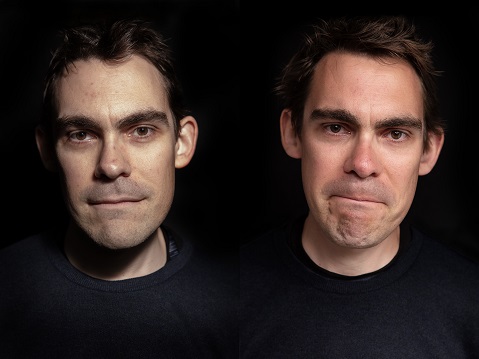 |
Dieter Daenens Belgium Guided by coincidence, I found myself, amid loving people. |
 |
Vicente Jiménez Spain (Valencia) The Camino is a wonderful amalgamation of profound experiences and an inner journey that is difficult to explain in words; it is an experience and a lifelong learning that inevitably leads you to want to return. |
 |
Tancrede Soyer France (Paris) Every day, we walk. Slowly, but surely. The Camino is an initiatory rite. Each day is a lesson. And when we return home, we only know one thing: we have to keep moving forward. Again and again. |
 |
Jeff Deans Australia |
 |
José Calixto Bautista Prieto Spain (Barcelona) |
 |
José Manuel Ramalho Fernades Portugal The photograph does not reveal it in its fullness, nor could it ever reveal, the whirlwind of inner feelings. At the departure, so much clothing and “weight”, expectations, doubts, misgivings, apprehension, but also a strong desire to move forward! At the arrival, with less clothing and feeling “lighter”, grateful and filled with all that the journey gives us and opens up for new stages. May God allow me to continue this journey of mine, moving forward and upward! |
Life
Life is a journey made up of multiple paths.
The first major path is gestation in the mother's womb and the birth into the world; the path to childhood, friends, and games; the path to school, first love and those who will come, and also heartbreak; the path to work, to illness and back from it so many times, to old age and death, which for many is nothing more than the transition to another path.
 |
 |
|
Marta Venier Italy (Bergamo) |
Jose “The Pilgrim” Spain (Málaga) |
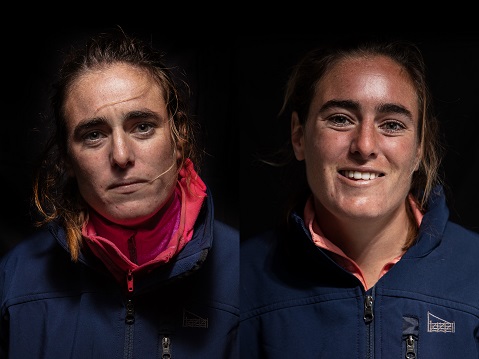 |
Anita Luis Argentina
|
|||
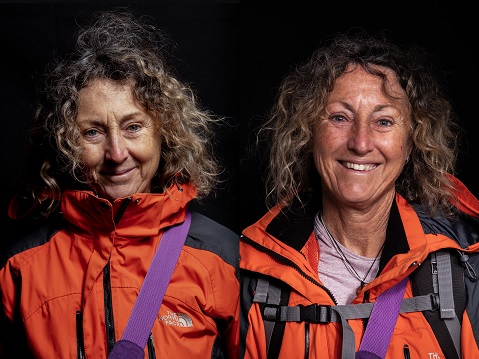 |
Tracy Austin Australia |
|||
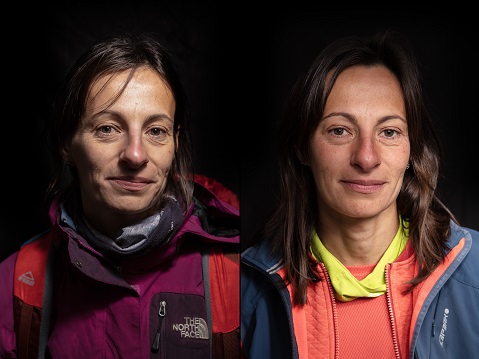 |
Lucia Grugnetti Italia (Pavia) |
|||
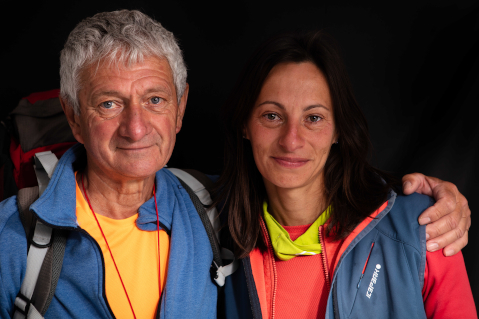 |
Giovanni Grugnetti and Lucia Grugnetti Italia (Pavia) When after 31 days I took off the backpack, I felt the weight of the end of the Camino. The essential was on my shoulders and, without any pretension, I lived the most profound experience, full of new friendships and intensified feelings, difficult to fulfill. To be well today, I need that backpack, the essentials. |
Javier Iglesias Ramos (1965, A Baña, A Coruña) graduated in Artistic Photography from the School of Art Mestre Mateo in Santiago de Compostela in 1998.
One of his most notable projects was Sáhara en el Corazón (Sahara in the Heart), a documentary about life in the Sahrawi refugee camps in Tindouf, Algeria. In 1998, its catalogue book was published. In 1999, he was a finalist for the III Luis Ksado Photography Creation Award from the Deputación da Coruña, with a work on the issue of drug addiction; his selected photographs were part of a traveling exhibition. Gender violence also sparked his interest, leading to a project exhibited at the Sargadelos Art Gallery in Santiago de Compostela in 2005, accompanied by the photography book A Vida (Life), with Lupe Gómez's poetry.
In July 2014, he held two exhibitions in Ireland, during the Galway Fringe Festival and the Kilkenny Arts Festival, with his project "Scéalta Bruscar Sráide – Litter Bin Stories", a collection of photographs taken in Dublin during the golden years of the "Celtic Tiger" in 2005 and 2006. In 2021, he published the photography book PATIENTIA, a work that presents a poetic vision of Irish character through the metaphor of turf and its culture in the west of Ireland.
He has received awards and has been selected on various occasions, including the Luis Valtueña Photography Awards in Madrid in 1999, and his participation in the XIX Fotobienal de Vigo in 2000.

