WE ARE CURRENTLY OPENWE ARE CURRENTLY CLOSED
OPENCLOSED

 OPENING TIMES
 LOCATIONOPENING TIMESLOCATION
The bath of immortality
Kumbh Mela comes from Sanskrit and carries a deeply mythological and symbolic meaning within Hinduism. Kumbh means “pitcher” or “jar”, and Mela refers to “gathering” or “assembly”. According to Hindu cosmology, during the battle among gods and demons over the amrita —the jar containing the nectar of immortality— four drops fell in Prayagraj, Haridwar, Nashik, and Ujjain. Thus, these cities became sacred sites where this festival is celebrated in rotation.
The “Gathering of the Pitcher”, considered the largest religious congregation on the planet, is a moment for seeking forgiveness for one’s own sins and those of 88 generations of ancestors through the snana (sacred bath). It is also a step towards breaking free from samsara —the cycle of reincarnations— and attaining moksha, or the liberation of the soul.
Between 13 January and 26 February 2025, a special Kumbh Mela took place in the city of Prayagraj. This event is normally held every 12 years, and when that cycle coincides with Jupiter’s full orbit (12 cycles of 12 years), it becomes exceptional and is called Maha, “great”. Manuel Valcárcel “Piro” captured an event that will not occur again for another 144 years; the previous one took place in 1881.
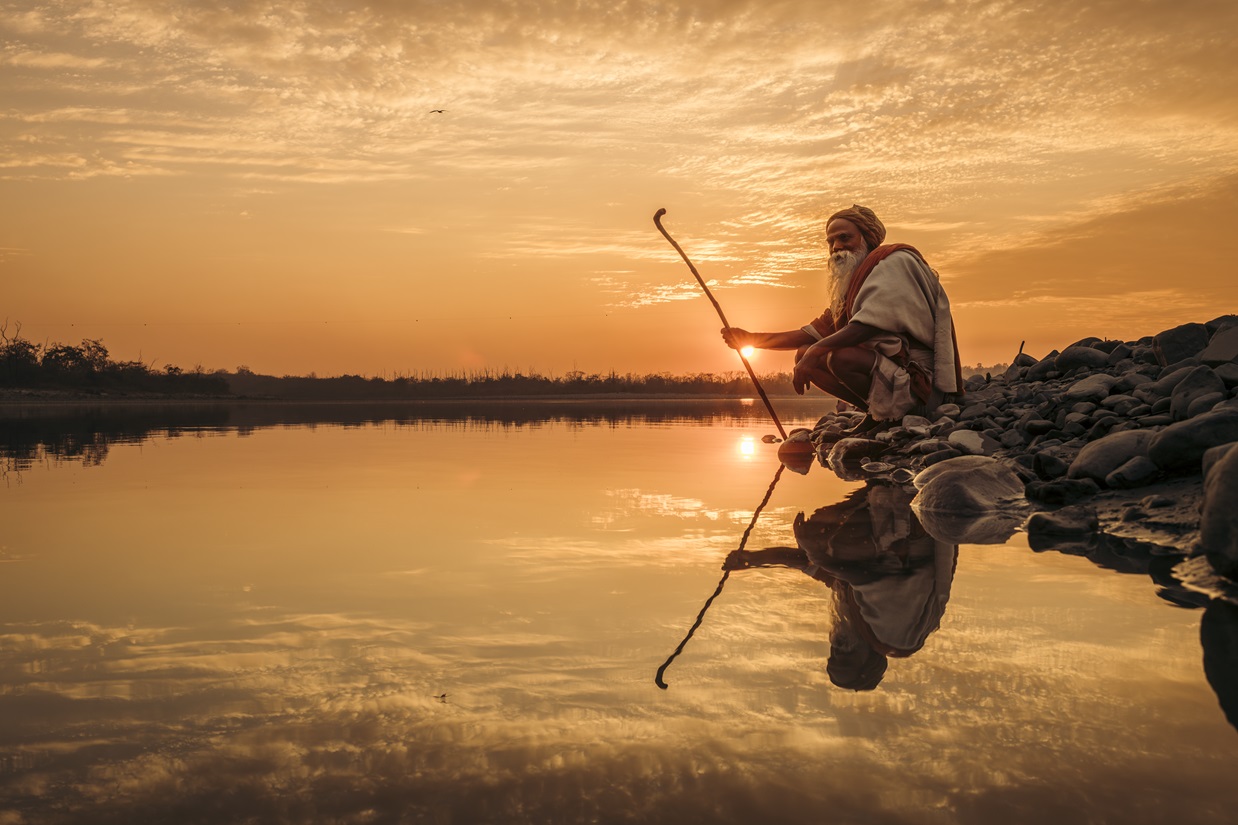
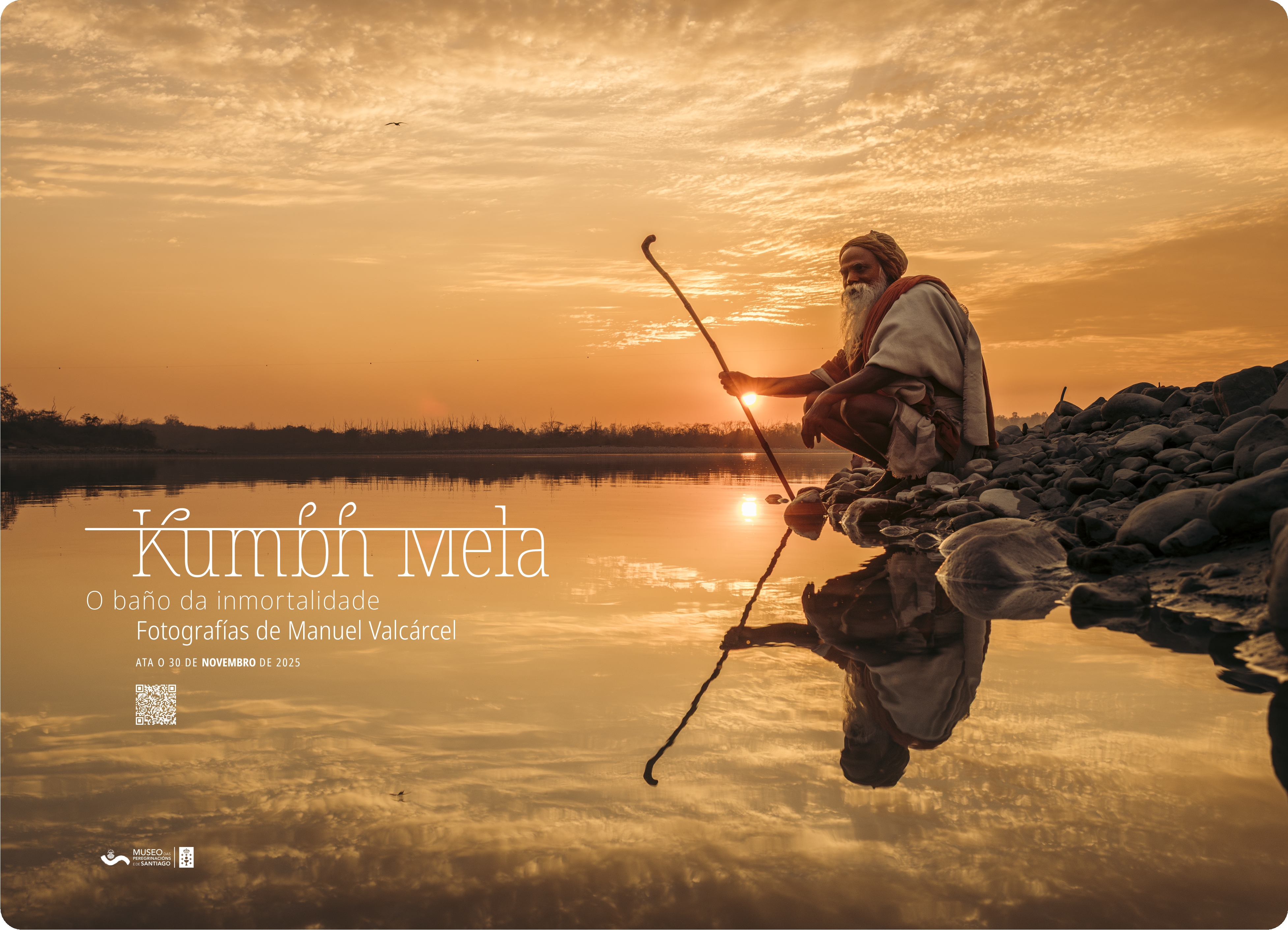
Pilgrim by the Ganges near Haridwar, where the next Ardh (“half”) Kumbh Mela will take place in 2027.
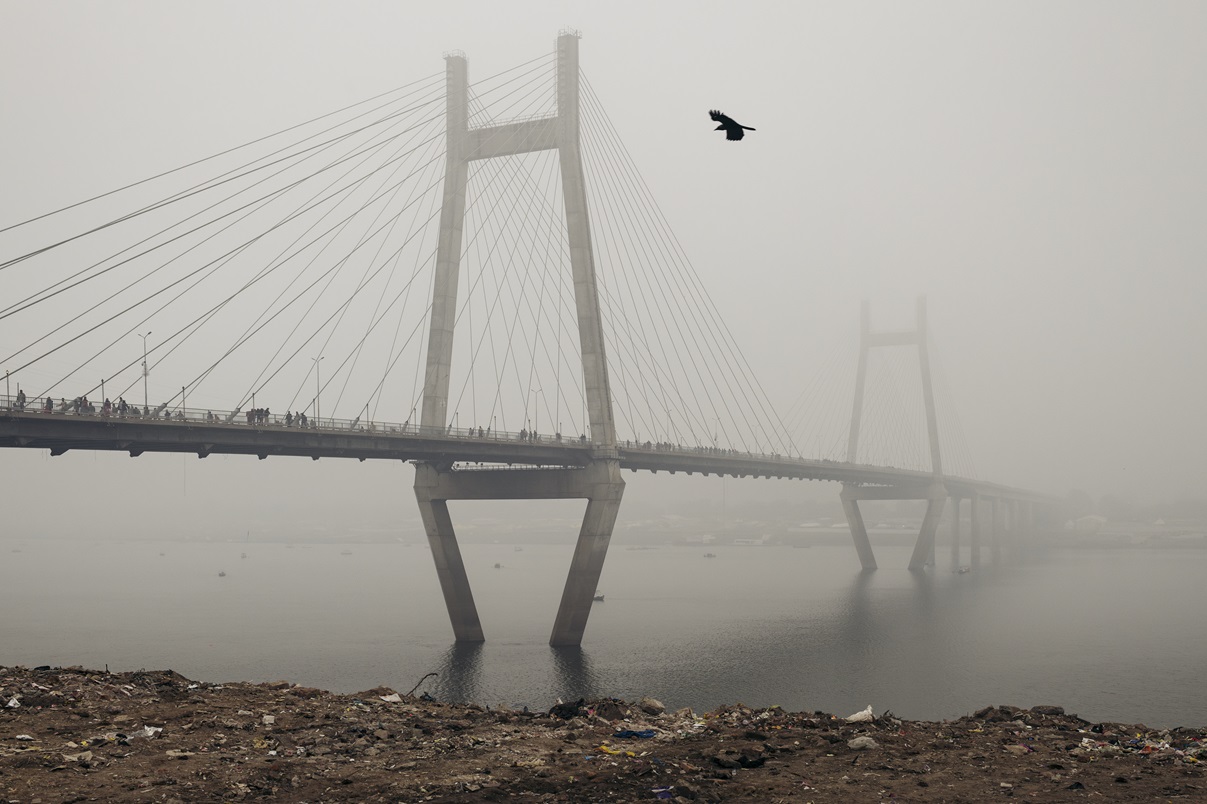
Pilgrims arriving at the gathering via the New Yamuna Bridge in Prayagraj.
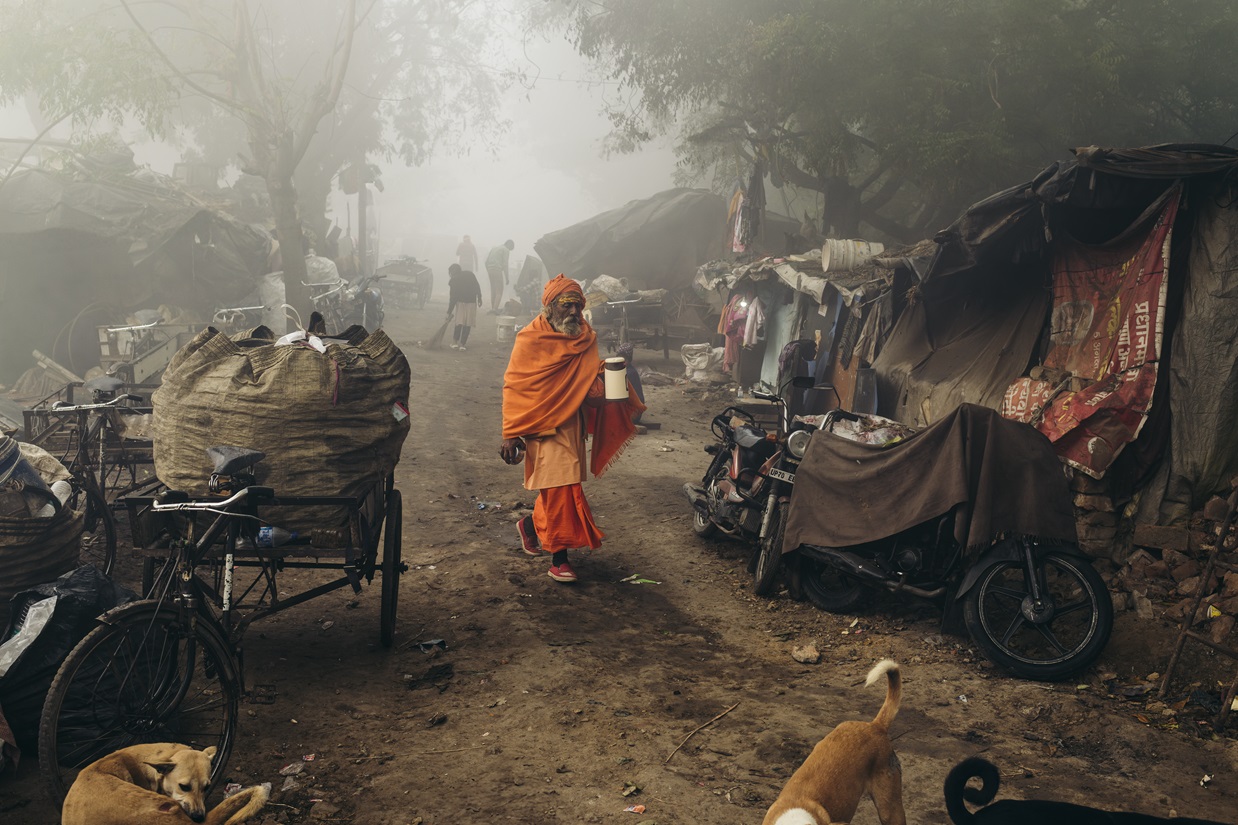
A sadhu, an ascetic monk, walks through the outskirts of Prayagraj.
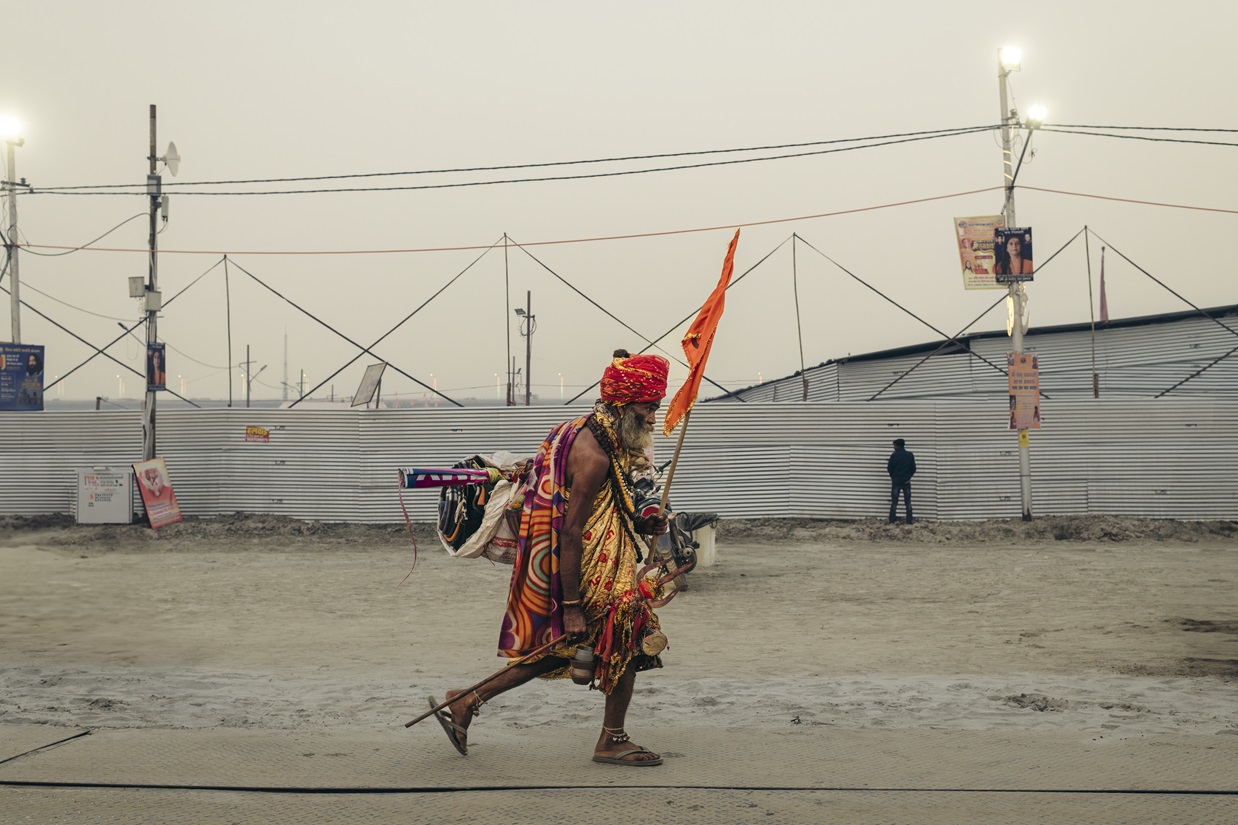
A sadhu carries his humble belongings towards Kumbh Nagri, the ephemeral megacity built on a 4,000-hectare plain.
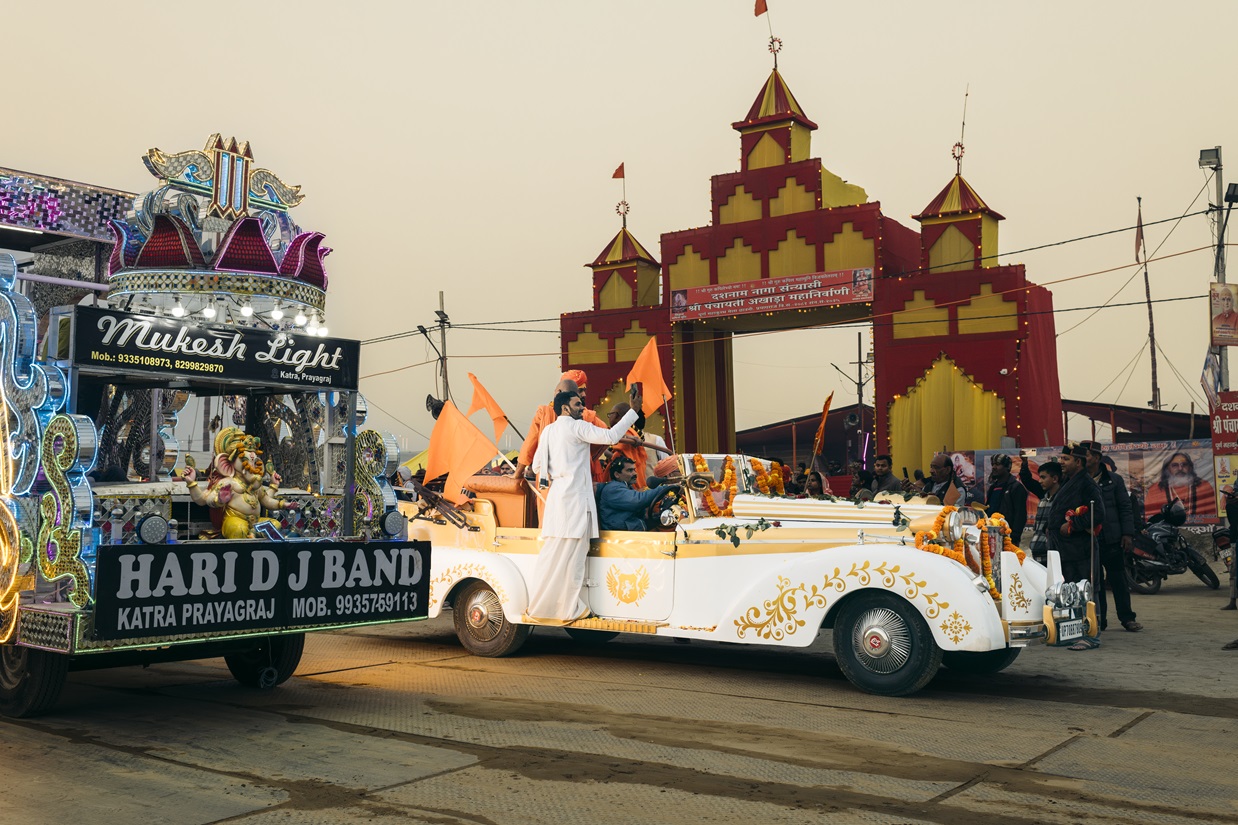
A guru (“one who dispels darkness”) arrives at Kumbh Nagri with his entourage in a Rolls-Royce.
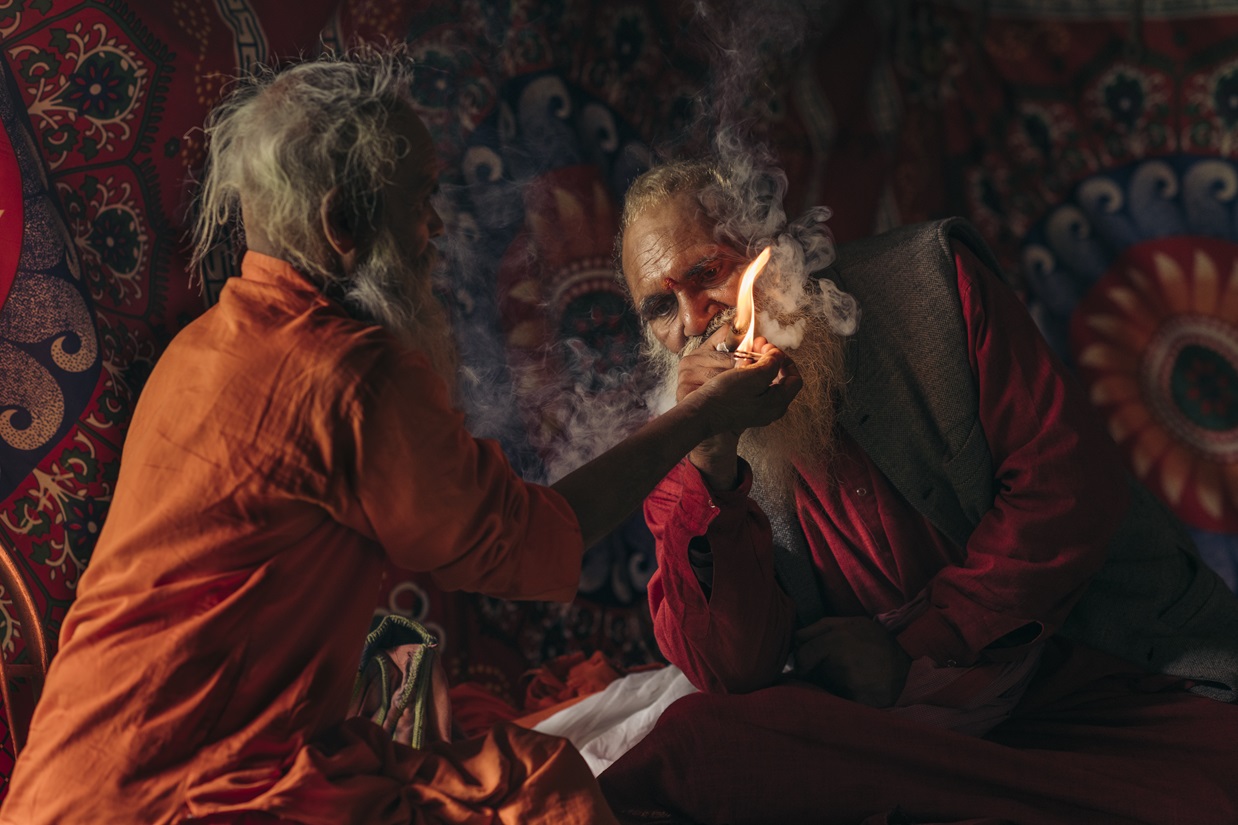
The Naga Baba (“wise elder”) Ram Giriji Maharaji smokes charas in a chillum, a pipe used by sadhus.
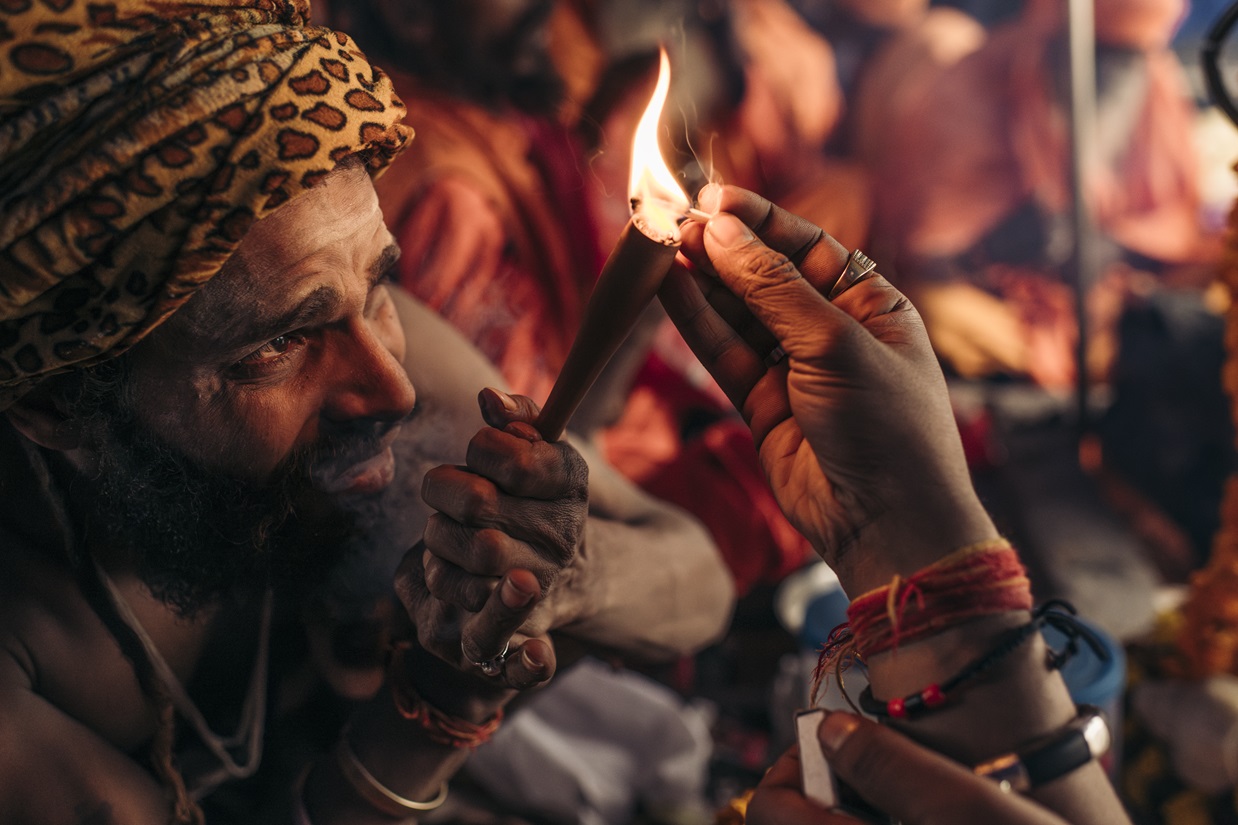
Naga Baba smokes charas in a chillum during a ceremony in honor of Shiva.
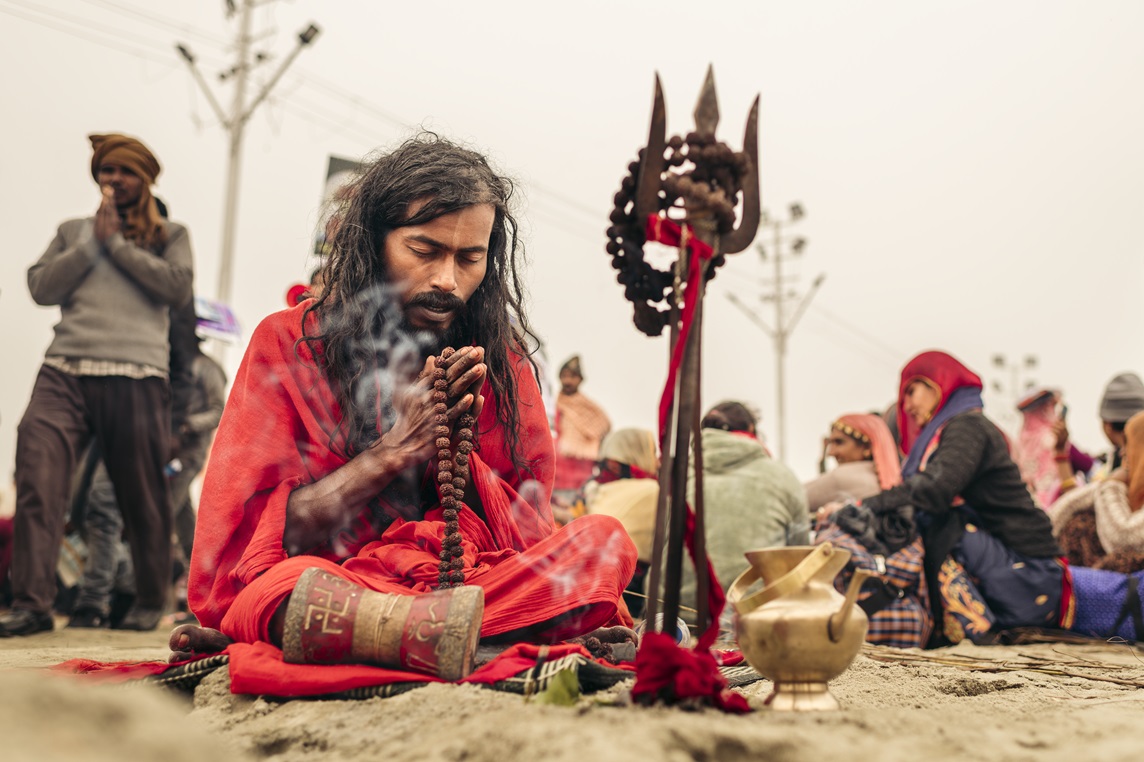
Sadhu meditating among pilgrims.
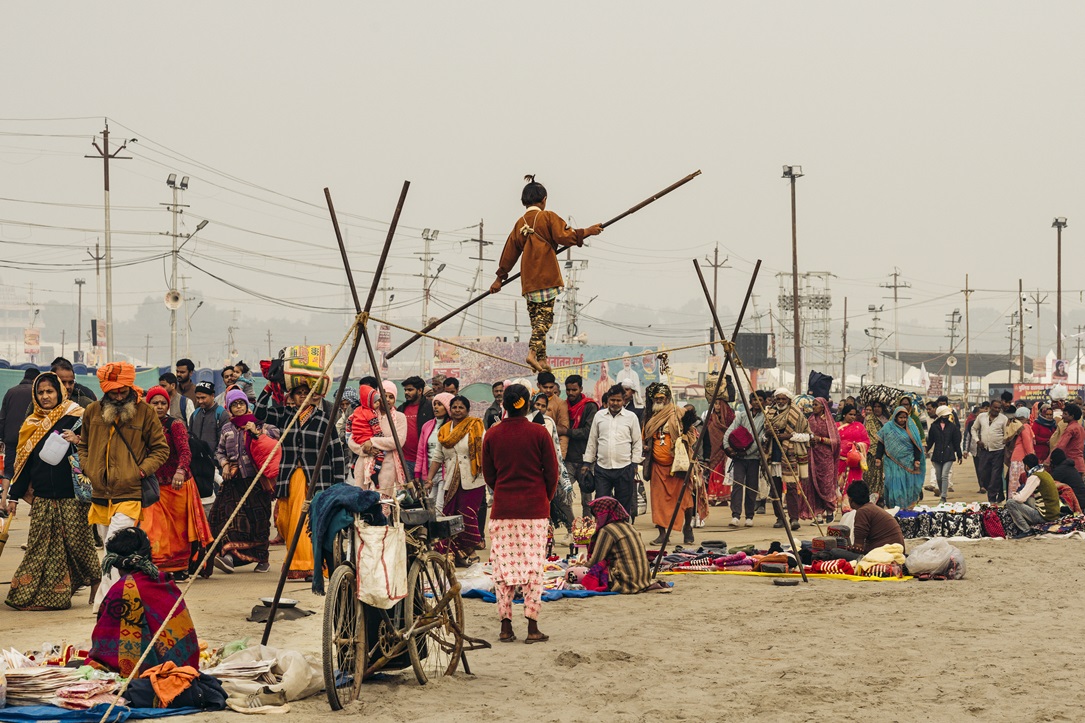
A girl, accompanied by her mother, participates in the event. They turn this activity into a business, earning some money while entertaining pilgrims, some of whom stay for the six-week celebration.
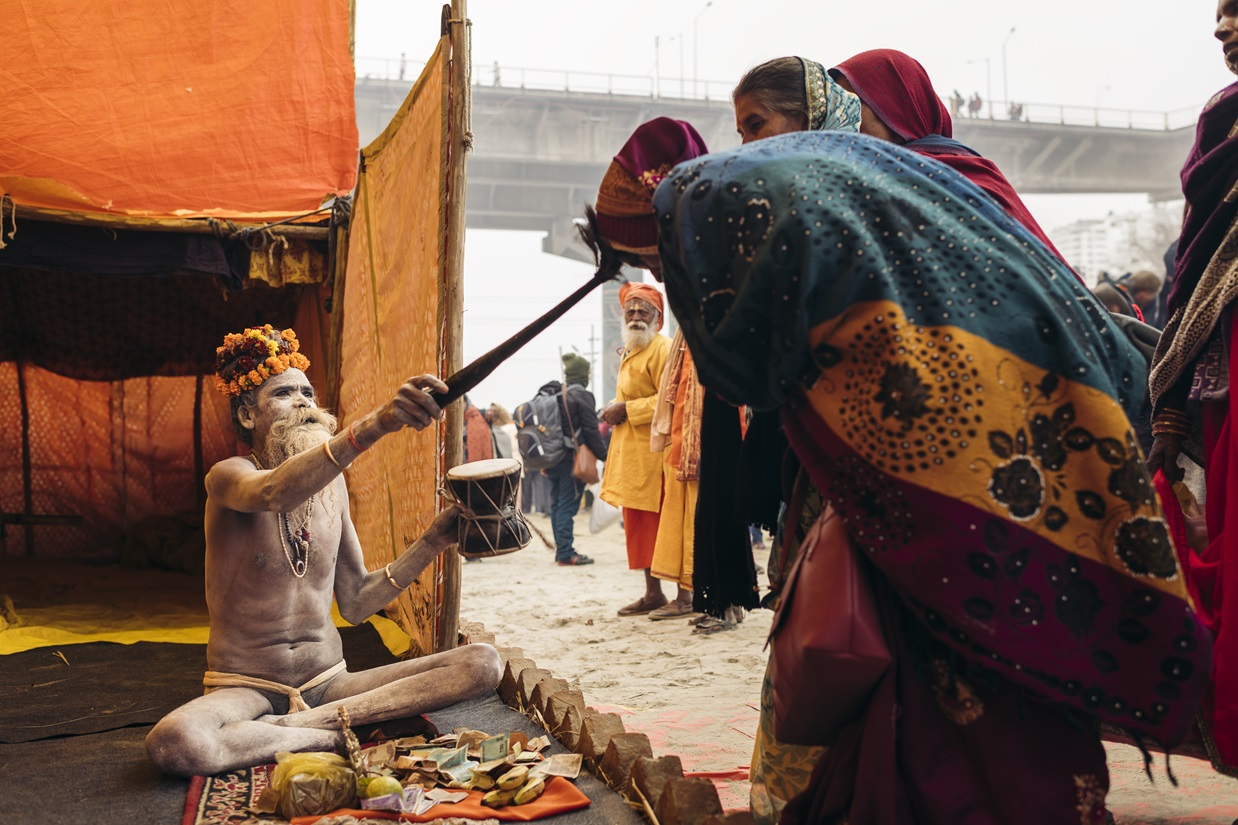
For a small donation, usually no more than 100 rupees, supplicants receive a blessing and ashes from a Naga Sadhu’s sacred fire
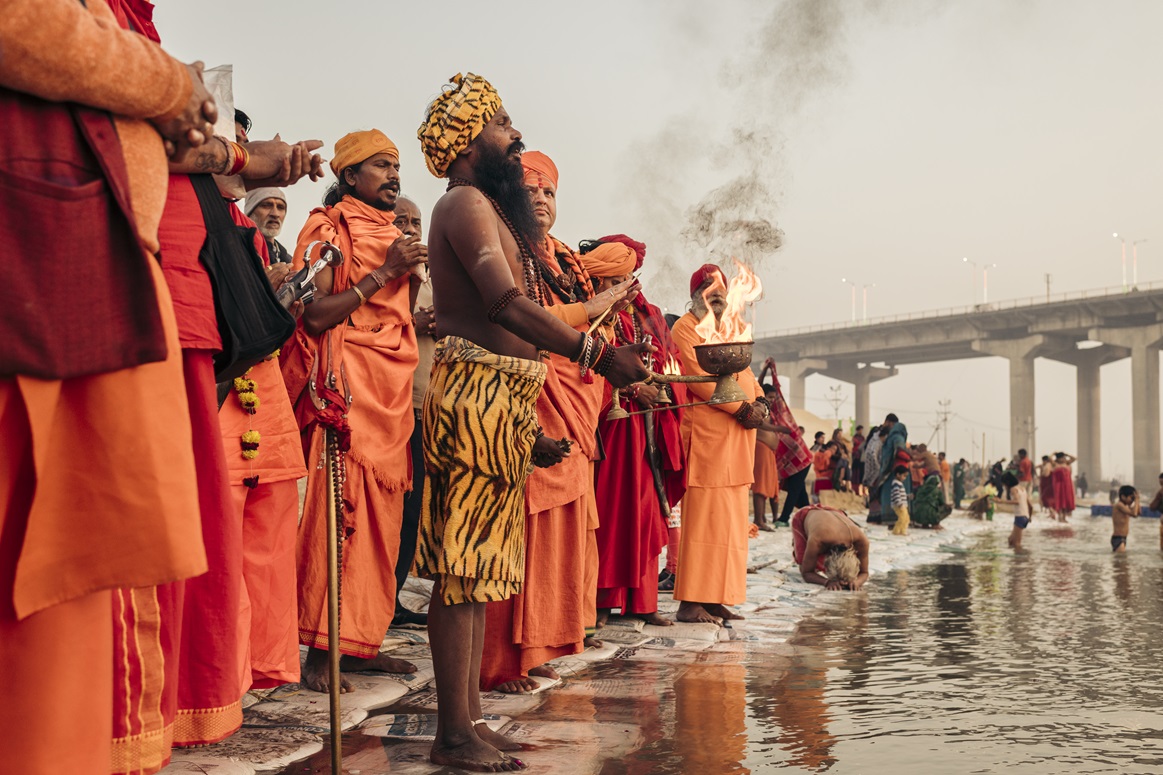
A sadhu from an akhara (religious order) devoted to Shiva during the Ganga Aarti, the Ganges worship ceremony. In Hinduism, the deity is said to meditate on a tiger skin in the Himalayas.
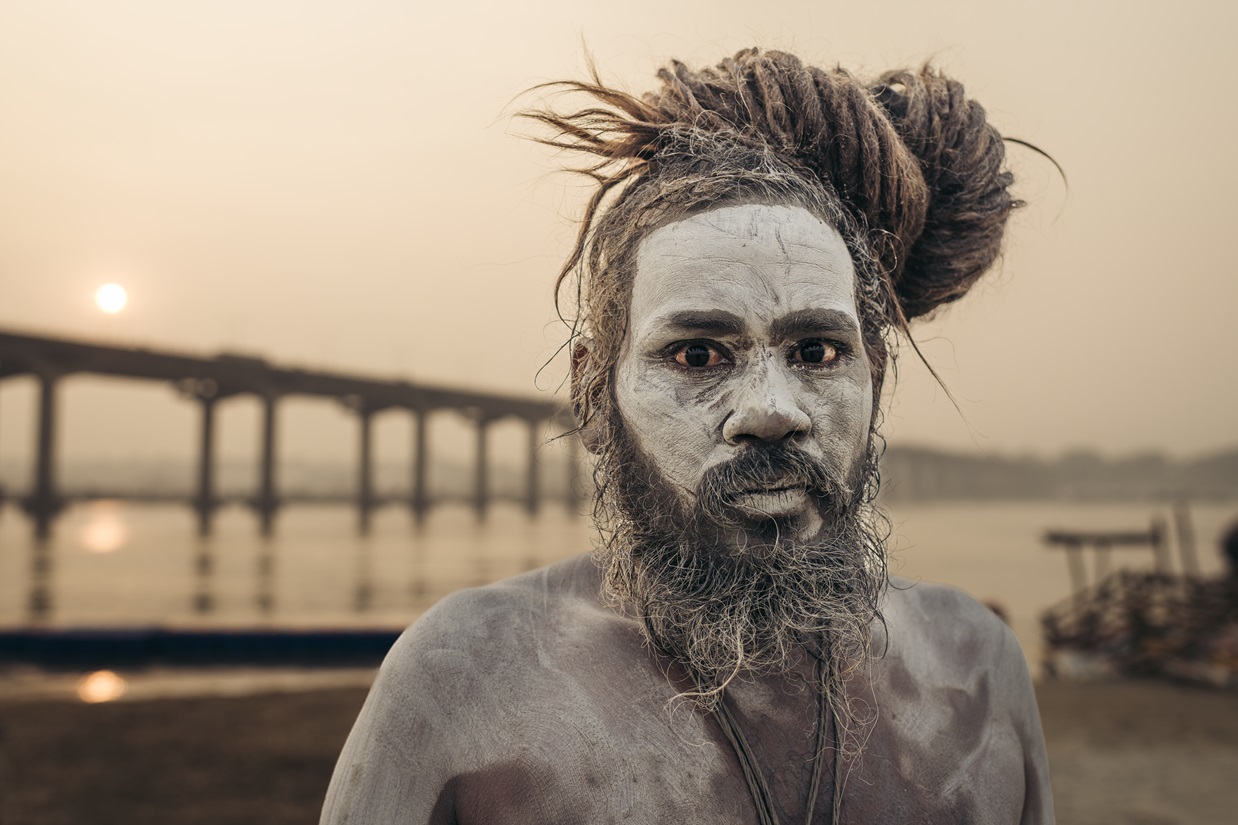
Among ascetics, Naga Sadhus are known for being naked or barely clothed, covered in vibhuti (ash) to symbolize both ego death and connection to the divine.
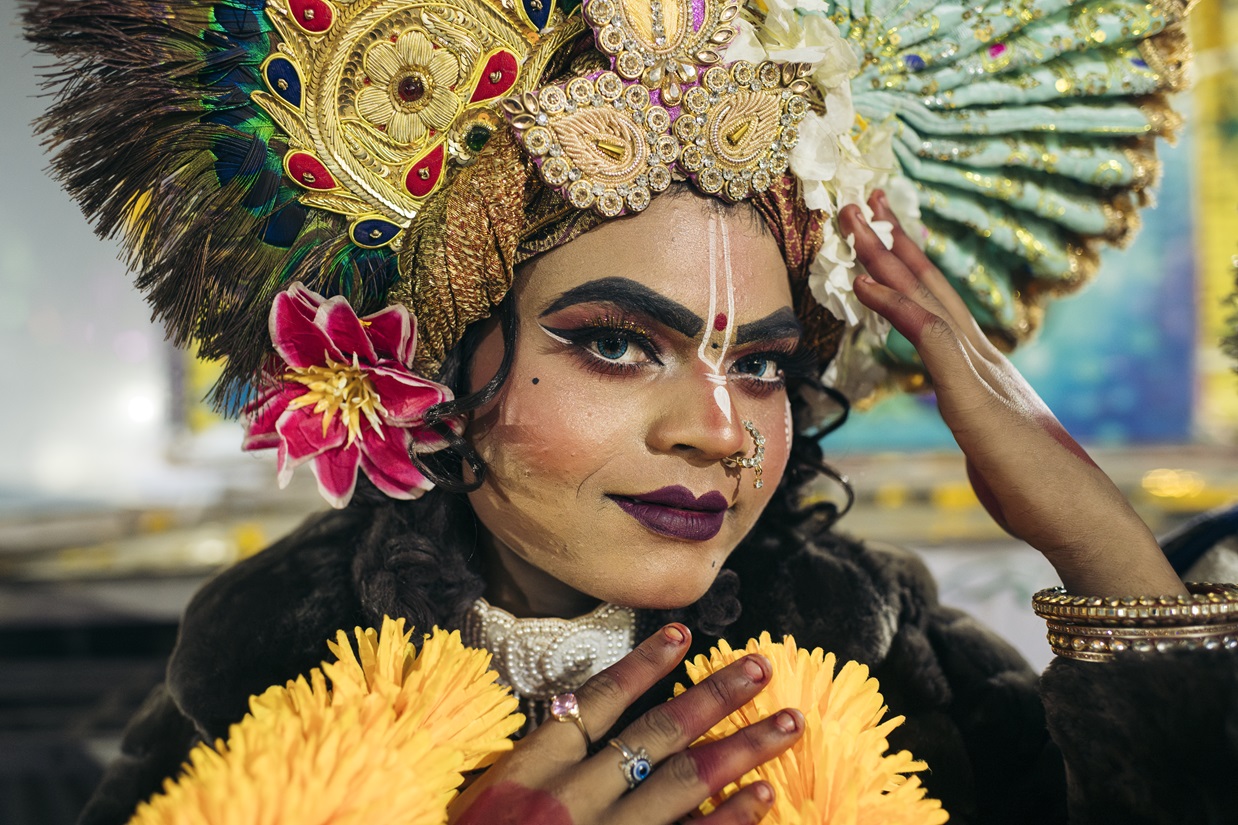
Hijra, considered a third gender.
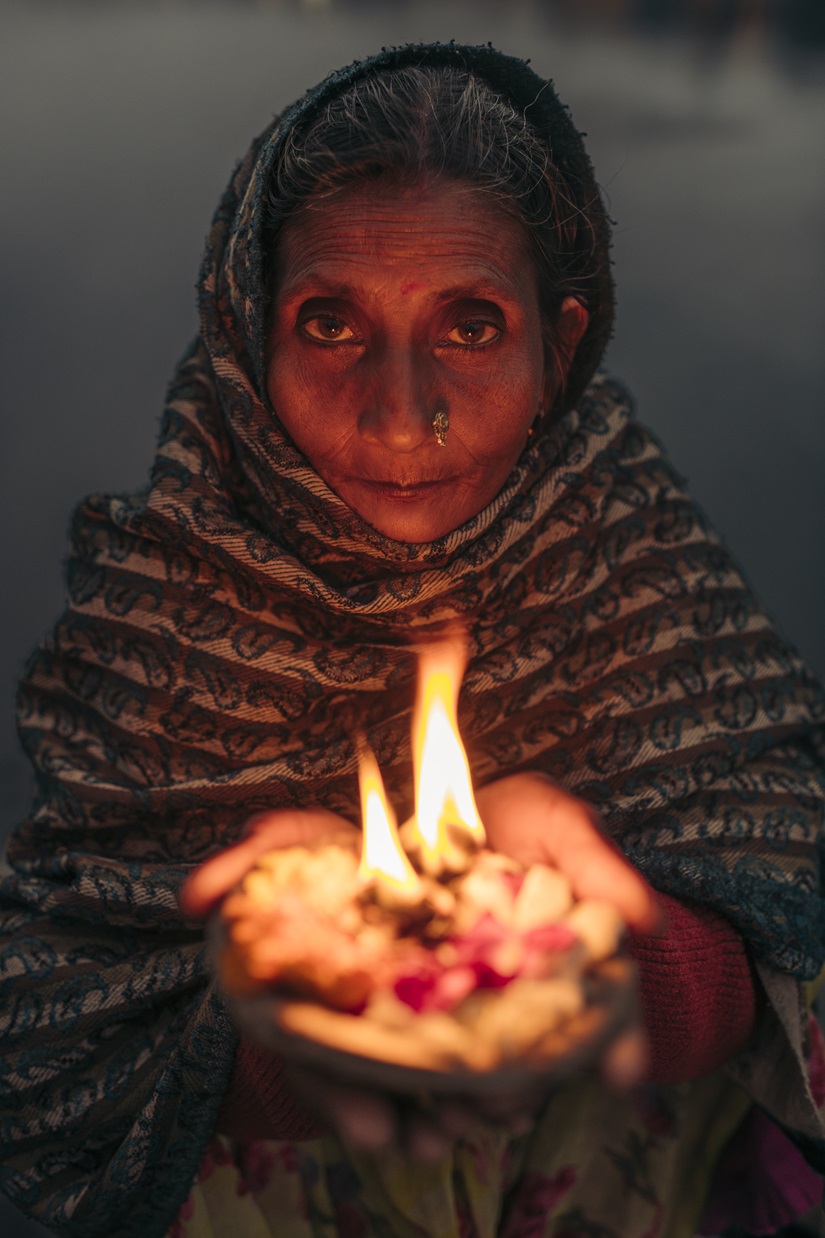
Diya or deepak, an offering to the sacred river. The flame represents divine light.
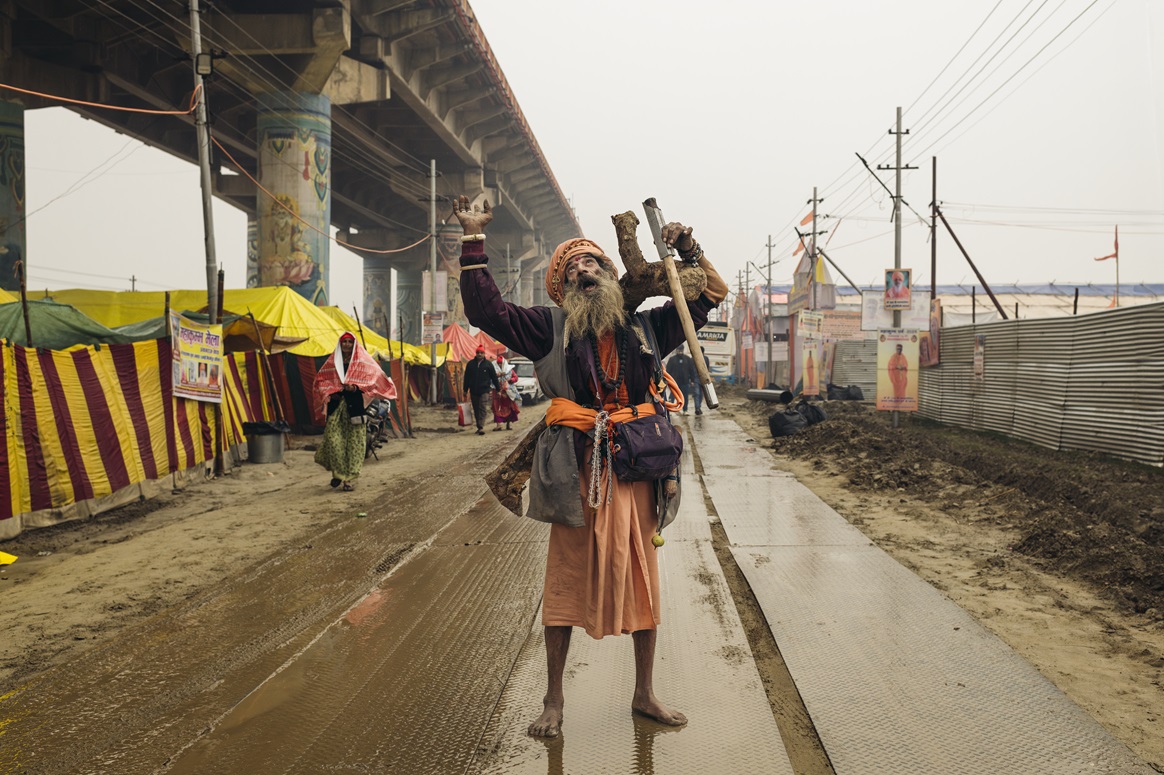
Sadhu celebrates the arrival of rain at the festival.
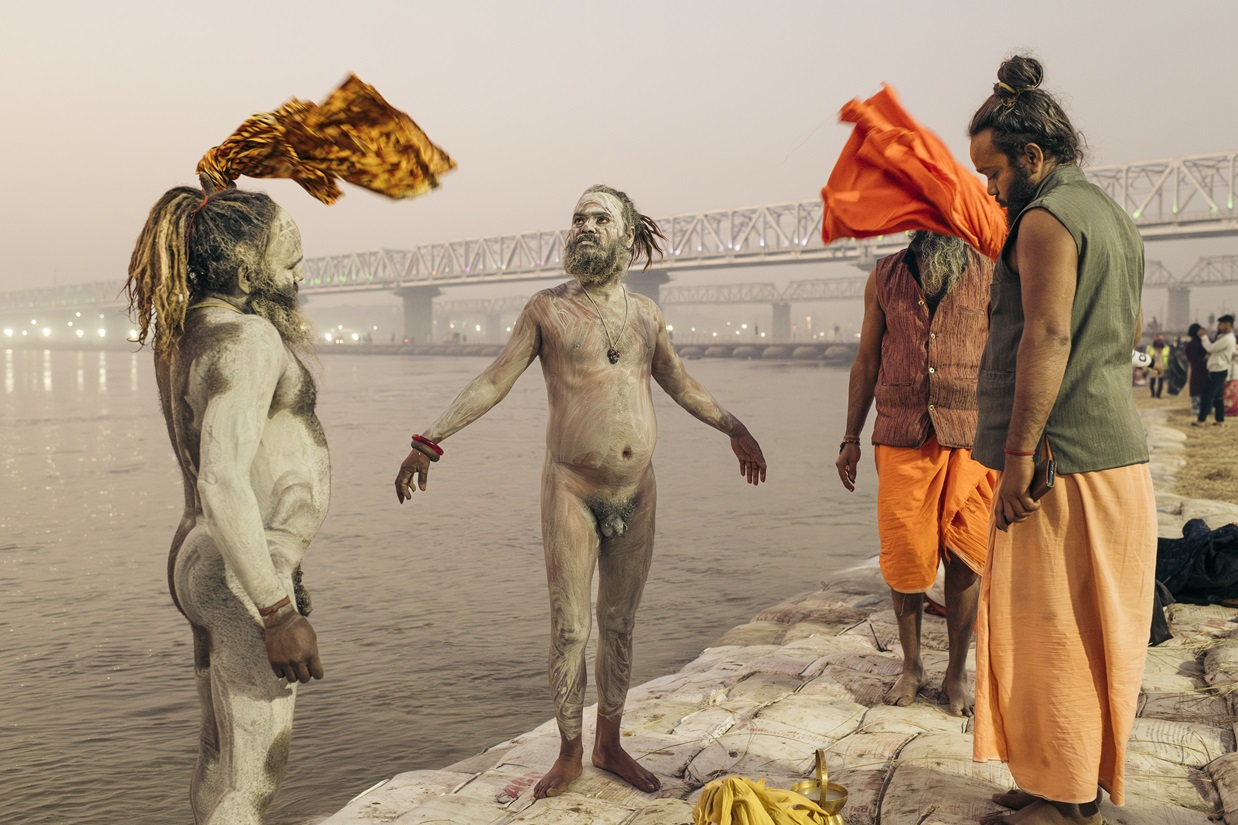
Naga Sadhus in a ceremony by the Ganges. In the background, the Daraganj Railway Bridge.
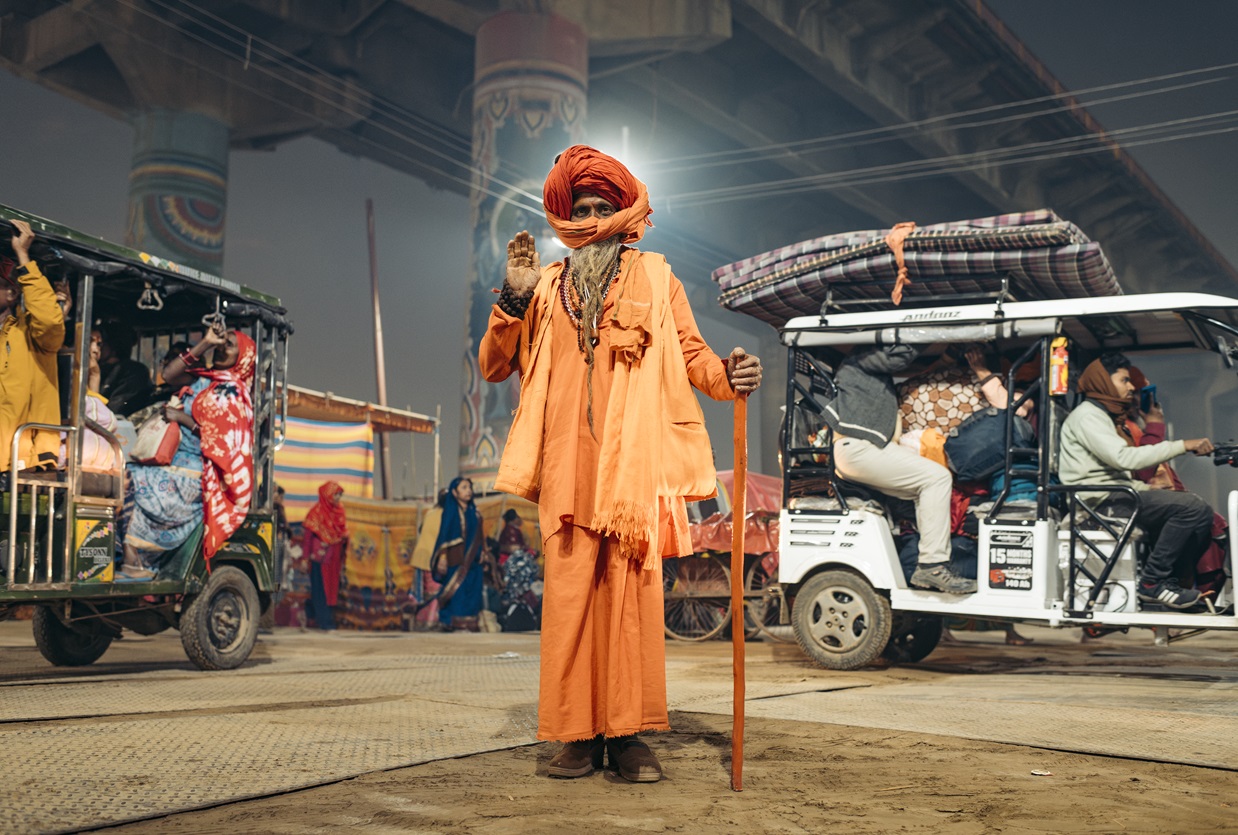
A baba is posing calmly under the Shastri Bridge. Shiva’s sadhus wear saffron robes, symbolizing the blessing of the fertile blood of Shiva’s consort, Parvati.
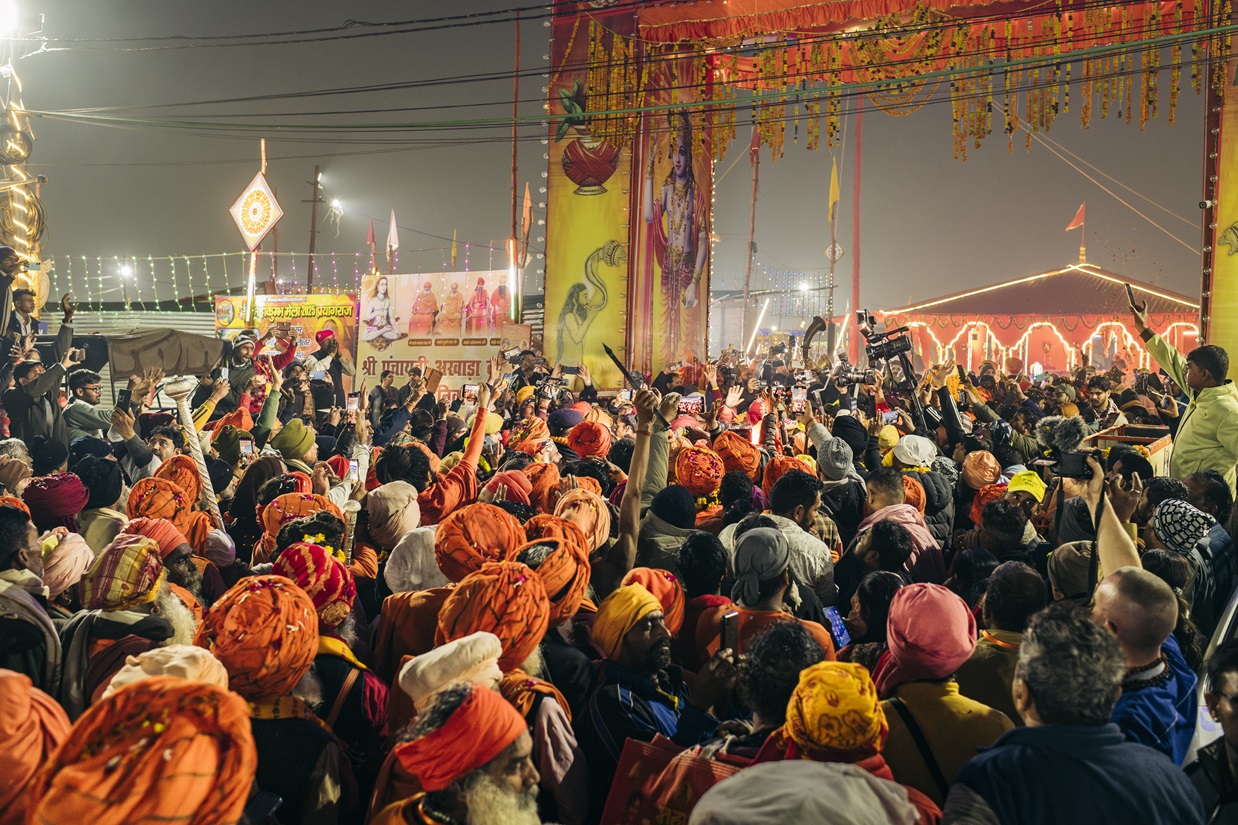
Over 45 days, from January 13 to February 26, thousands attend the festival.
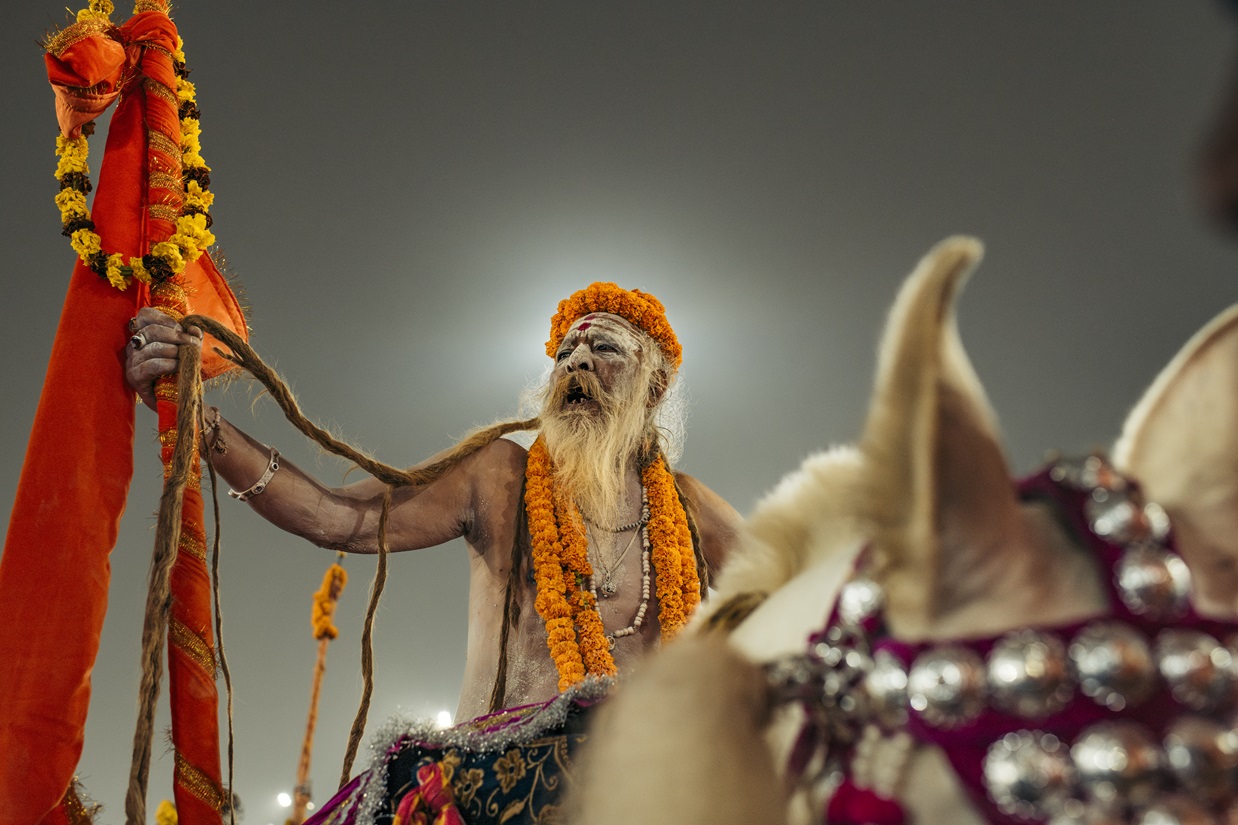
A Naga Sadhu adorned with marigold garlands, a sign of respect and reverence for his spiritual status.
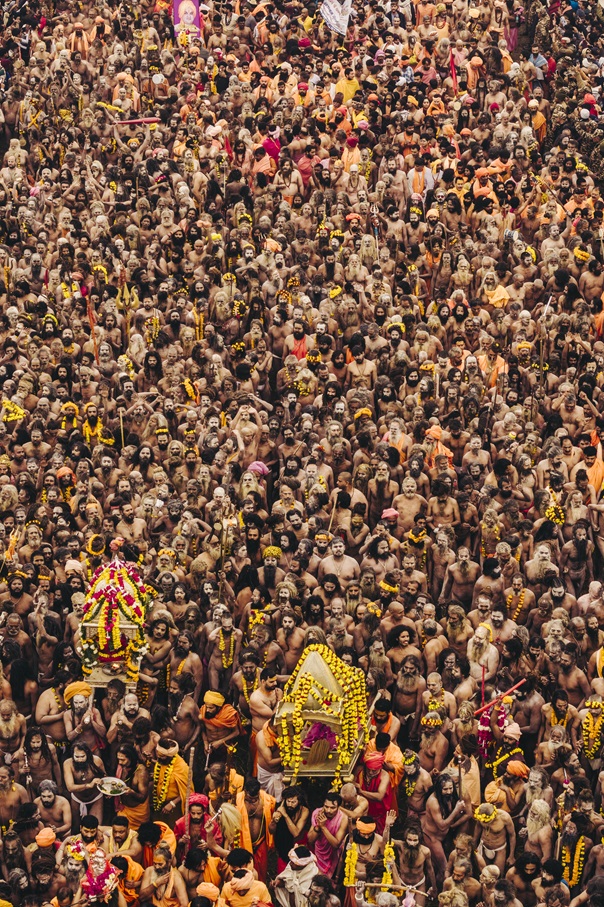
On January 14, the first shahi snan, or “royal ritual bath,” was held, attended by 35 million men and women. In total, an estimated 400 million people gathered during this year’s festival.
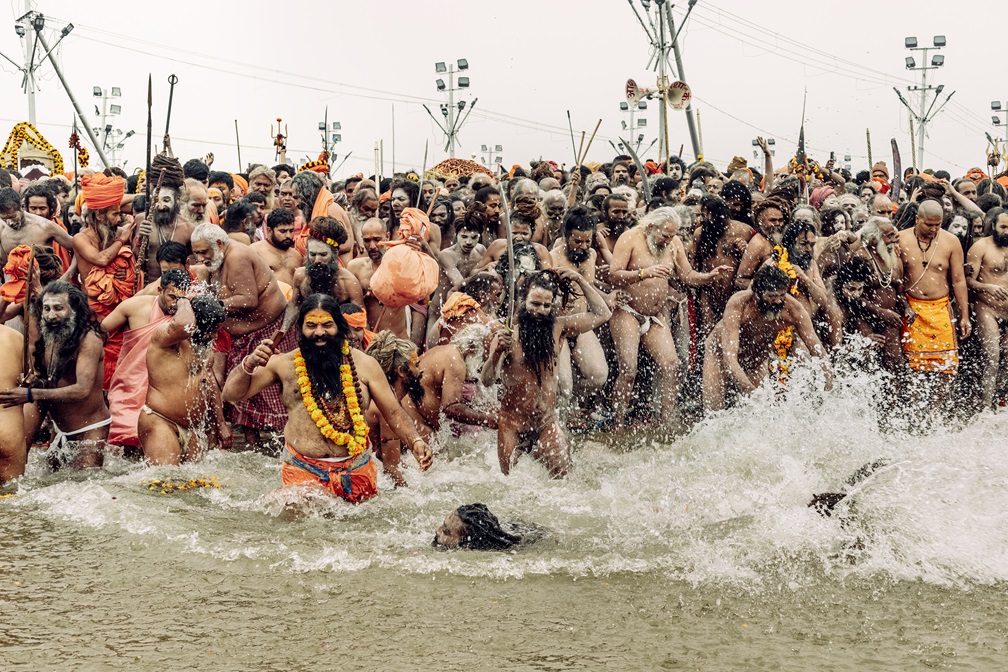
Naga Sadhus perform the first shahi snan ritual at the Sangam, where the Ganges, the Yamuna, and the mythical Saraswati meet. According to Hindus, in 2025 the river will be especially vibrant due to the alignment of the Sun with Jupiter and the Moon, an event taking place every twelve years.
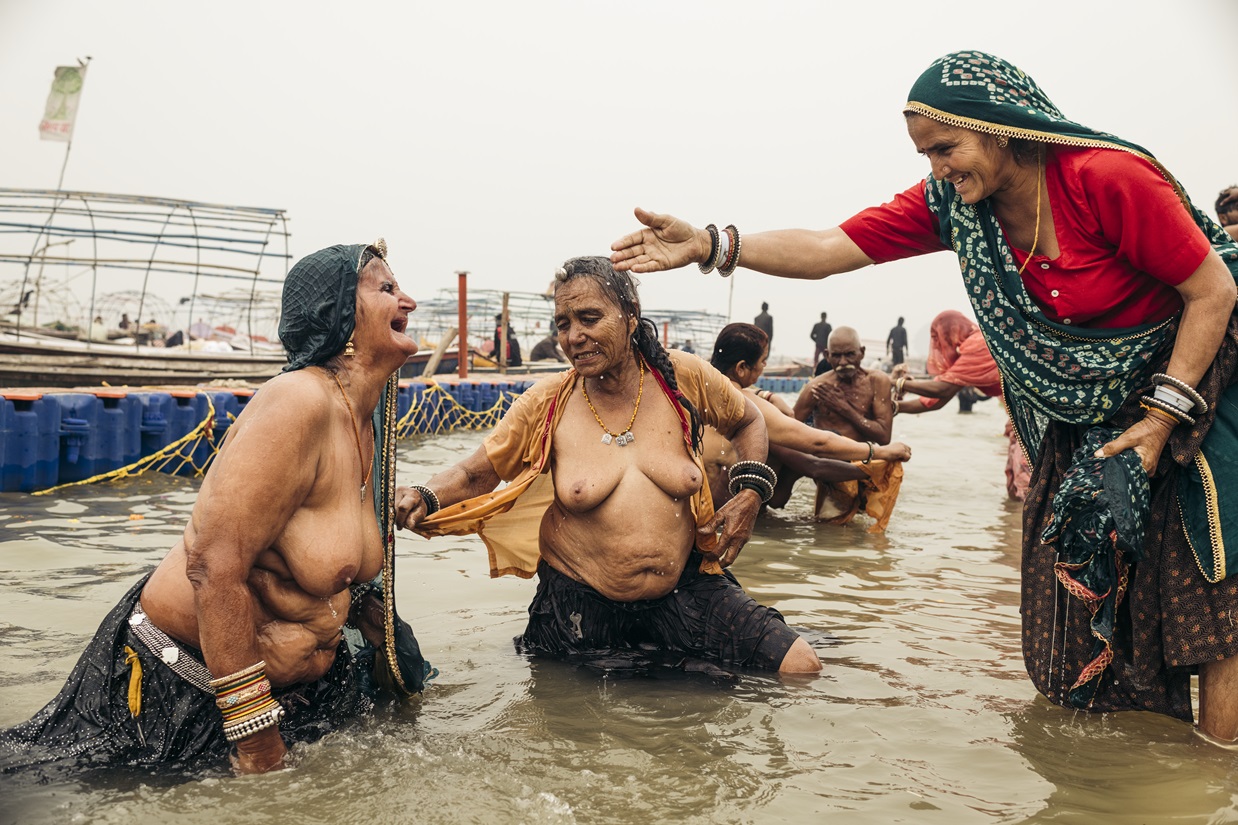
During the shahi snans, they shout “Ghai Shree Ran!” (“Hail to God!”) as they pour water, seeking absolution from the Ganges.
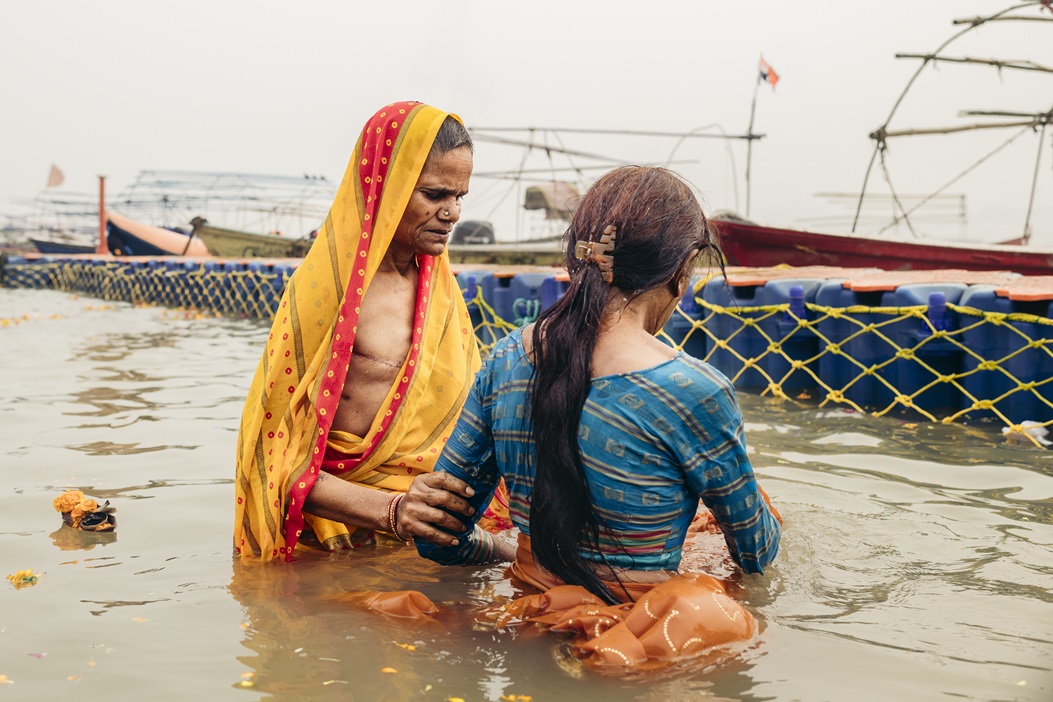
A woman, after a serious illness, offers herself to the ritual bath in the Ganges.
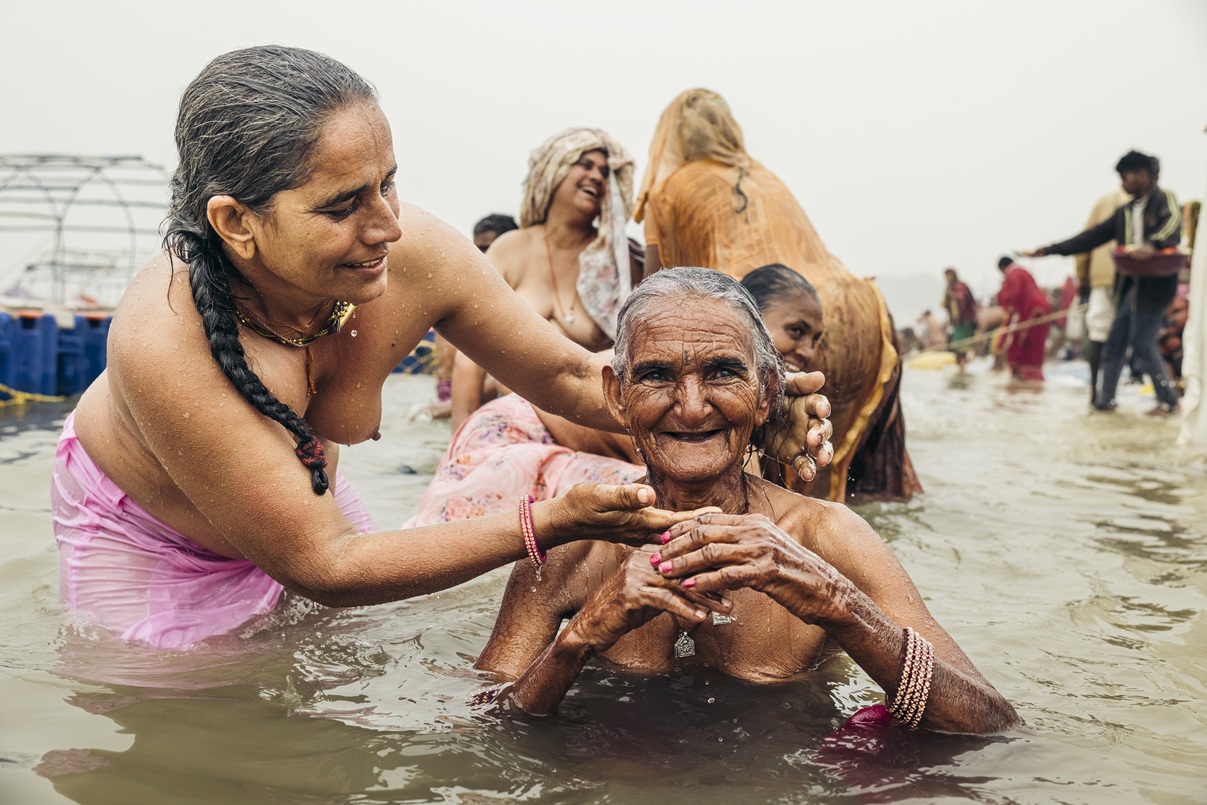
Hindus are obliged to bathe at least once in their lifetime in the Ganges, which is a spiritual bond connecting all ages.
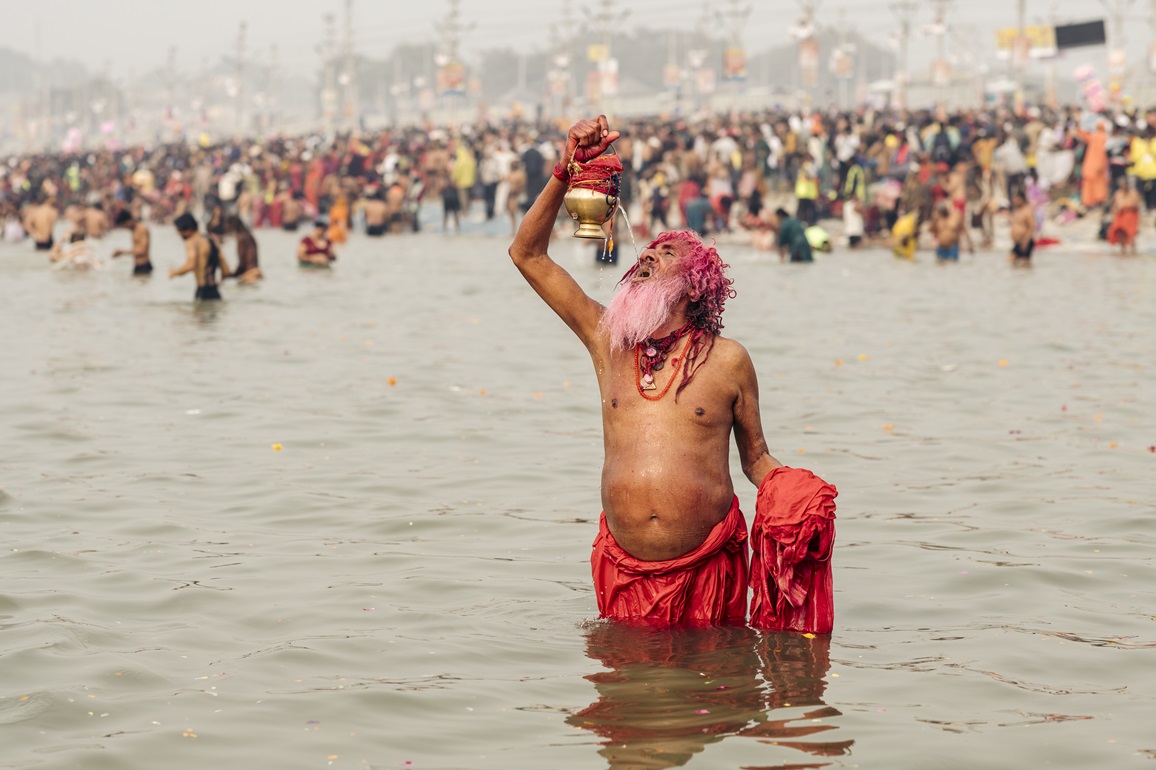
The amrita, or nectar of immortality.
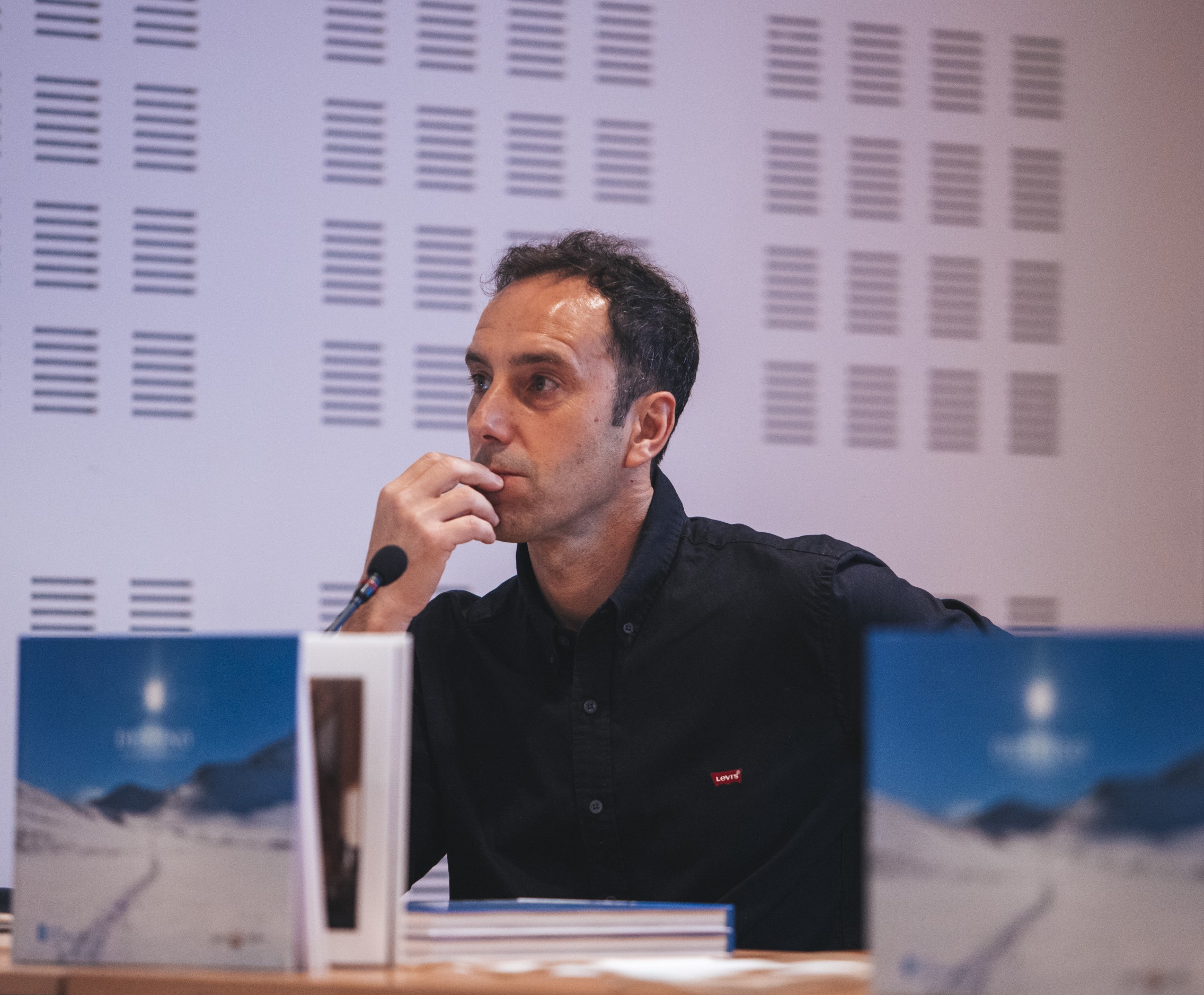
Manuel Valcárcel «Piro» was born in Monforte de Lemos (Lugo, Galicia) in the spring of 1975. He began his photography studies in Lugo at the Ramón Falcón School of Arts, and started his professional career in the world of television, which led him to travel the globe covering events ranging from conflicts like the Iraq War, to natural disasters, such as the Japan tsunami, and political events like Nelson Mandela’s funeral. However, his visual productions have focused on the human condition and the diversity of cultures. This inspired his first photographic project, “Nómades” (Nomads) (2019), in which he traveled across five continents in search of the world’s last nomadic peoples, and “Destino” (Destiny) (2021), an intimate project centered on five pilgrimages.